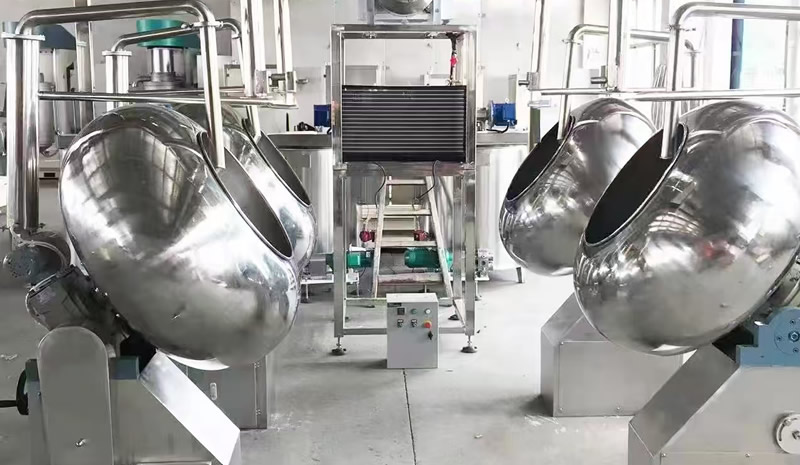
The specifications of chocolate roller polishing machines may vary depending on different manufacturers and product requirements. Here are some common specifications and parameters:
Roller diameter: The roller diameter of a chocolate roller polishing machine can have different size options, with a common diameter range between 20 cm (8 inches) and 60 cm (24 inches).
Capacity: The capacity of a polishing machine depends on the size and design of the drum, and can come in different capacity options, usually expressed in weight, such as several kilograms or tens of kilograms.
Rotating speed: The rotating speed of the polishing machine can be adjusted according to different needs. Generally speaking, the rotating speed can be adjusted between 10 rpm and 60 rpm.
Power: The power of a polishing machine depends on its size and design, and is typically measured in watts (W) or kilowatts (kW). A common power range is between 200 watts (W) and 5 kilowatts (kW).
Control mode: The control mode of the polishing machine can be manual operation or automated control. Automated control can include a digital control system that sets polishing time, rotational speed, and other parameters.
Materials: Chocolate roller polishing machines are typically made of stainless steel or other food-grade materials to ensure hygiene and durability.
Stainless Steel: Stainless steel is a material that is resistant to corrosion, high temperatures, and easy to clean. It is widely used in food processing equipment due to its high safety requirements for food. Stainless steel has good wear resistance and durability, and can resist corrosion and contamination from food materials such as chocolate.
Polymer: Polymer is a plastic material that can be used to manufacture the outer shell or internal components of the drum. Polymers are characterized by their lightweight, wear resistance, impact resistance, and chemical stability. They are usually easy to clean and do not react with food, providing good protection for the quality and hygiene of chocolate.
Ceramic: Ceramic materials are used in some high-end chocolate roller polishing machines. Ceramic rollers exhibit excellent polishing effects, providing more detailed and uniform polishing results. In addition, ceramic materials exhibit high wear resistance and high temperature resistance.
The meanings of these different materials are as follows:
Food Safety: The materials used in chocolate roller polishing machines must comply with food safety standards to ensure the hygiene and safety of the products. Stainless steel and certain specific polymer materials are commonly used in food processing equipment due to their high hygiene requirements for food and their non-reactivity with food.
Wear resistance and durability: The material of the polishing machine needs to possess good wear resistance to cope with long-term operation and friction with materials such as chocolate. Stainless steel and ceramic materials exhibit high wear resistance and durability, ensuring the stable performance and longevity of the polishing machine.
Polishing Effect: Different roller materials can affect the polishing effect. Ceramic rollers typically provide a finer and more uniform polishing effect, and may be preferred in scenarios where higher demands are placed on the appearance and texture of chocolate products.