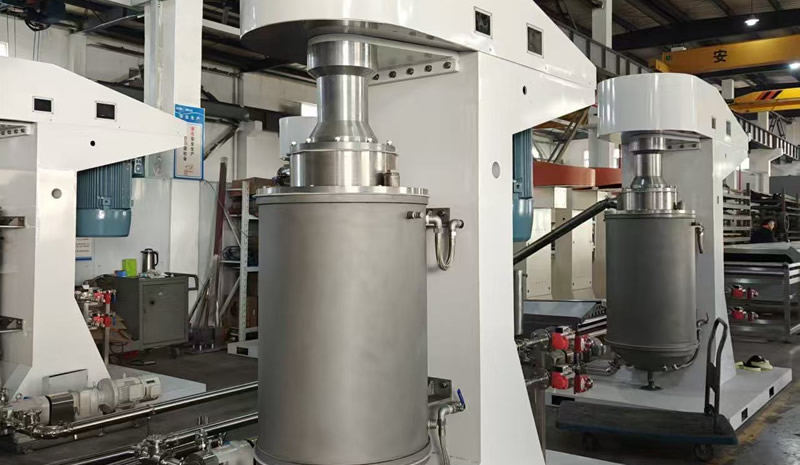
The core components mainly include PLC touch screens, sensors, motors, electrical components, ceramics, and cemented carbides.
PPLC is the core component of the control system, responsible for receiving input signals, executing control programs, and outputting signals. Through programming, PLC can achieve various control functions such as logic control, timing control, speed control, and temperature control.
As a human-computer interaction interface, the touch screen enables functions such as parameter setting, operation monitoring, and alarm prompting for the ball mill through touch operations. The touch screen typically supports multi-touch, boasts a user-friendly interface, and provides a good user experience.
Sensors are used to detect the operating status of the ball mill, such as temperature sensors, pressure sensors, current sensors, etc. The sensors convert the monitored signals into electrical signals, which are then processed and analyzed by PLC.
A motor controller or frequency converter is used to control the rotational speed of the ball mill to meet processing requirements. By adjusting the voltage and frequency of the motor, precise speed control and torque control can be achieved.
Electrical components include contactors, relays, circuit breakers, fuses, etc., which are used to control the circuits of ball mills and protect electrical equipment. These components are usually designed and arranged by professional electrical engineers.
Program control software is used to write and manage control programs for control systems, in order to achieve automated control and data processing. These software are typically based on PLC programming languages (such as Ladder diagram, function block diagram, etc.) or high-level programming languages (such as C language).
Stainless steel is one of the most common materials used in ball mills, especially in parts that come into contact with food. Stainless steel exhibits excellent corrosion resistance, wear resistance, and hygienic properties, is easy to clean, and has no negative impact on the quality of chocolate.
Ceramic materials are commonly used for the grinding stones or balls of ball mills, due to their excellent wear resistance and high temperature tolerance. They can provide a fine grinding effect and have minimal impact on the quality of chocolate.
Cemented carbides are commonly used for cutters or grinding plates in ball mills due to their excellent wear resistance. These carbide materials can effectively grind chocolate particles and have a long service life.