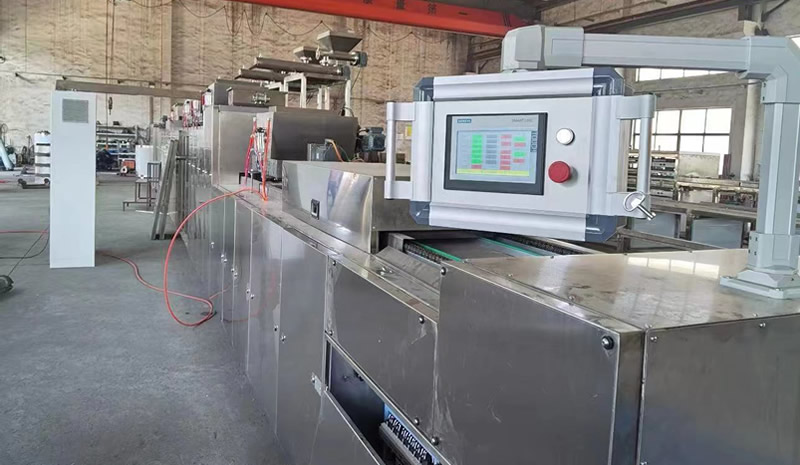
The specifications of chocolate depositing machines can vary depending on production needs and manufacturers. Below are examples of common chocolate depositing machine specifications and technical indicators:
Production capacity: The production capacity of a chocolate depositing machine is typically measured in terms of the weight of chocolate or the number of products processed per hour. Common specifications include 100 kg/hour, 200 kg/hour, etc.
Workbench size: Workbench size refers to the dimensions of the working area of the chocolate depositing machine used for placing molds and depositing chocolate. Common specifications include 400mm x 600mm, 600mm x 800mm, etc.
Casting method: Chocolate casting machines can adopt different casting methods, such as unidirectional casting, multidirectional casting, circular casting, etc. The specific specifications may vary depending on the casting method.
Temperature control system: Chocolate depositing machines are typically equipped with a temperature control system to regulate the temperature of the chocolate. The range and accuracy of temperature control are among the technical specifications, with a common range of 30°C to 70°C and an accuracy of ±1°C.
Power Supply Requirements: The power supply requirements for a chocolate pouring machine refer to the voltage and frequency required by the equipment. Common power supply specifications include 220 volts and 50 hertz.
One-way pouring: This is the most basic method of chocolate pouring, where chocolate flows unidirectionally into the mold from a single pouring spout. This method is suitable for products with simple shapes and low design requirements. Chocolate flows into the mold from a single pouring spout on the top or side.
Multi-directional pouring: Multi-directional pouring involves injecting chocolate into the mold simultaneously through multiple pouring ports, ensuring a more uniform filling of the mold. This method is suitable for products with more complex shapes and higher precision requirements. The multiple pouring ports can be located at different parts of the mold, allowing chocolate to flow in from multiple directions.
Circulatory pouring: The circulatory pouring method involves injecting chocolate into the mold in a circular manner, allowing the chocolate to better fill the details and gaps of the mold. This method is suitable for products that require high precision and high-quality surfaces. The chocolate circulates within the mold, filling every detail, and then air is removed through an exhaust system.
Thin-layer casting: The thin-layer casting method is used to produce thin, sheet-like chocolate products, such as chocolate chips or chocolate bars. Chocolate flows into the mold in thin layers and then solidifies within the mold. This method requires precise control over the flow rate of chocolate and the thickness of the thin layers to ensure uniformity and consistency of the product.